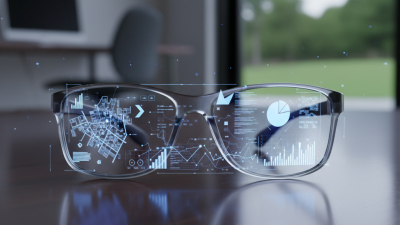
Why Choose Smart Glasses for Your Business Needs?
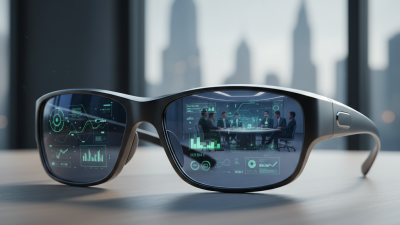
As businesses evolve, so does the technology that supports them. Smart Glasses have emerged as a powerful tool for various industries. According to recent reports, the global smart glasses market is expected to reach $12.9 billion by 2026, growing at a CAGR of 13.61%. This growth is driven by increasing demand for augmented reality (AR) applications in sectors like healthcare, manufacturing, and logistics.
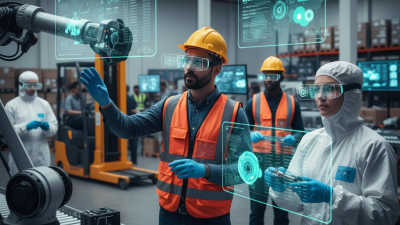
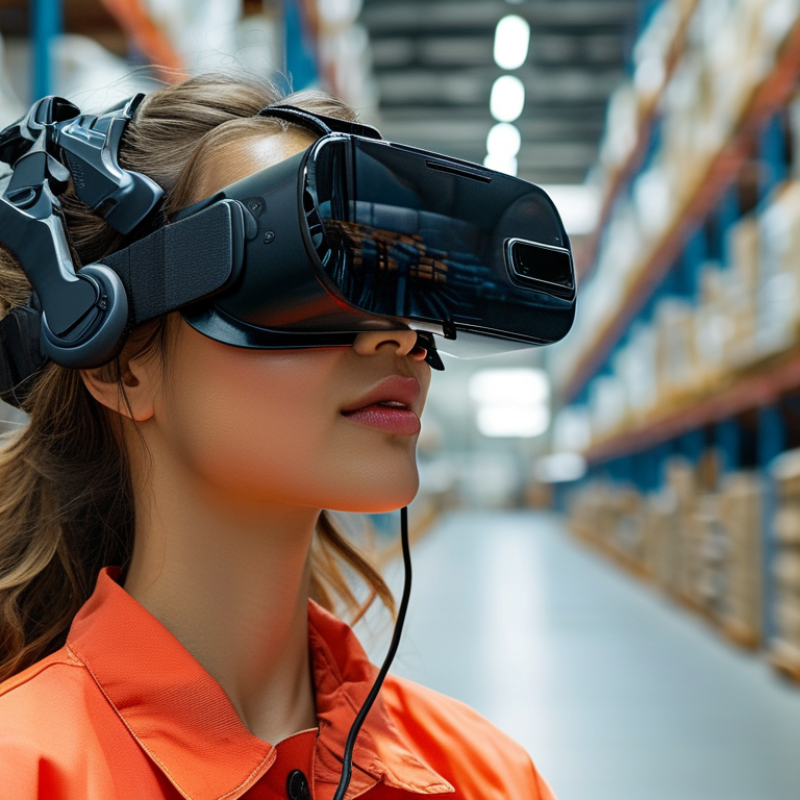
Smart Glasses enhance efficiency and productivity. For instance, in warehouse settings, workers can access real-time data hands-free, leading to a 25% increase in operational efficiency. However, the integration of this technology requires careful planning and adaptability. Many companies face challenges in training staff effectively or managing the transition to smart devices. Acknowledging these hurdles is crucial for successful implementation.
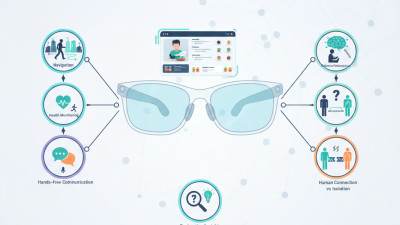
Despite the excitement surrounding Smart Glasses, businesses should also consider potential downsides. Privacy concerns and the learning curve for employees are just a few challenges that arise. Employing Smart Glasses can transform business operations, but it's essential to weigh the benefits against these potential drawbacks. Thoughtful reflection and strategy are key to leveraging this innovative tool effectively.
The Evolution of Smart Glasses in Business Applications
The evolution of smart glasses in business has been remarkable. According to a report by Gartner, the market for smart eyewear is projected to reach $20 billion by 2025. Companies are increasingly adopting these devices to enhance productivity and streamline operations. Industries like manufacturing and logistics have seen significant improvements in efficiency. Workers equipped with smart glasses can access real-time data without needing to use their hands, allowing them to focus on tasks at hand.
However, challenges remain. The integration of smart glasses into daily operations requires investment and training. Workers may find it distracting or uncomfortable to wear these devices for extended periods. A McKinsey survey revealed that 55% of employees feel unsure about adopting new technologies. This highlights the need for organizations to foster a culture of adaptation and support. It's critical to educate employees about the benefits and functionalities of smart glasses to overcome these initial barriers.
Despite these hurdles, the potential of smart glasses in business applications is significant. In healthcare, for instance, surgeons can use augmented reality to visualize patient data during procedures. This improves accuracy and patient outcomes. The evolution of smart glasses is not just about technology; it’s about reshaping how businesses operate in a rapidly changing landscape.
Why Choose Smart Glasses for Your Business Needs? - The Evolution of Smart Glasses in Business Applications
| Feature |
Description |
Business Benefits |
Use Cases |
| Augmented Reality (AR) |
Integrates digital information with the real world |
Enhances training & development, real-time data visualization |
Training simulations, maintenance assistance |
| Hands-free Operation |
Voice commands and gesture control functionality |
Increases productivity and efficiency |
Warehouse management, field service |
| Real-Time Collaboration |
Connects users for instant feedback and support |
Reduces downtime and improves decision-making |
Remote assistance, team projects |
| Data Analysis Tools |
Built-in analytics for performance tracking |
Informed strategy development, process optimization |
Sales analytics, operational efficiency evaluation |
| Customization Options |
Tailoring features to specific industry needs |
Flexible solutions that adapt to changing business demands |
Industry-specific applications, brand integration |
Key Features of Smart Glasses for Enhanced Productivity
Smart glasses are revolutionizing the way businesses operate. One standout feature is the hands-free functionality. This allows employees to multitask effectively. Imagine a technician repairing equipment while receiving real-time data in front of their eyes. Their hands remain free, maximizing efficiency.
Another critical aspect is augmented reality (AR) capabilities. Smart glasses can overlay digital information onto the physical world. This enhances training sessions and improves accuracy in complex tasks. For instance, a warehouse worker can see navigation prompts projected directly onto their field of view. This reduces errors and accelerates workflows.
However, adopting new technology can pose challenges. Employees may struggle to adapt to smart glasses initially. Training programs are essential for a smooth transition. Additionally, the cost of implementation can be daunting for small businesses. Organizations must weigh potential benefits against expenses. Finding experienced consultants can help mitigate these concerns and enhance the overall implementation process.
Productivity Benefits of Smart Glasses in Business
How Smart Glasses Facilitate Remote Collaboration
Smart glasses are reshaping how teams collaborate remotely. They provide hands-free access to information, enhancing communication and productivity. Imagine a team member wearing smart glasses while fixing machinery. They can see schematics overlaid on their field of view. This reduces downtime and improves accuracy.
Remote training sessions become immersive experiences with smart glasses. Experts can guide on-site workers in real-time. Visual cues overlay instructions directly onto the equipment, making complex tasks easier to follow. However, not all environments are compatible with such technology. Issues like connectivity and user comfort need addressing.
While the potential is significant, adopting smart glasses can present challenges. Organizations must invest in training and infrastructure. Some users may feel overwhelmed by the technology initially. Skepticism can hinder integration. A thoughtful approach can lead to better outcomes. Balancing innovation with practicality is crucial in this evolving landscape.
Case Studies: Successful Business Implementations of Smart Glasses
Smart glasses are transforming various industries. In logistics, companies are using these devices for real-time inventory tracking. Warehouse workers wear smart glasses that display picking lists directly in their field of vision. This leads to improved efficiency, but some employees report a steep learning curve. Adapting to new technology can be challenging, and initial training is essential.
In healthcare, hospitals use smart glasses for surgical assistance. Surgeons can view patient data without looking away from their work. However, while this enhances focus, some medical staff find the technology cumbersome. It may also require additional setup time in fast-paced environments. Careful consideration is needed to balance benefits with usability concerns.
Retail environments also see innovative uses of smart glasses. Employees can provide customers with augmented reality experiences that highlight product features. Yet, integrating this technology can require substantial investment and employee buy-in. Resistance to change can pose challenges. Understanding both the advantages and difficulties is key to successful implementation.
Evaluating the Cost-Effectiveness of Smart Glasses for Businesses
Smart glasses are increasingly being recognized for their practical applications in business. They enhance productivity by providing hands-free access to information. Employees can receive real-time data without distraction, allowing for smoother workflows. This technology bridges the gap between physical tasks and digital resources. However, initial costs can be a hurdle for many businesses.
Evaluating cost-effectiveness is crucial. Consider potential savings from improved efficiency and reduced errors. Training costs may be higher initially, but many find that smart glasses accelerate employee onboarding. Some businesses report increased sales opportunities when staff can engage more effectively with clients. Analyzing the return on investment is essential.
Yet, not every organization might benefit equally. Some sectors may see limited impact. It's essential to assess specific needs before making a move. Companies should pilot programs to evaluate the technology's fit. Regular reviews can help identify areas for improvement or adjustment. Investing in smart glasses requires careful consideration of both benefits and challenges.
 Smart Glasses
 Smart Ring
 Smart Locator


 +86-13613020876

 CONTACT NUMBER
 CONTACT NUMBER