What is Audio Glasses the Future of Wearable Sound Technology?
Audio glasses are the latest innovation in wearable sound technology, blending function and style. According to a report from Grand View Research, the global smart glasses market is projected to reach $120 billion by 2028. This growth signals a strong consumer interest in products that offer both visual and auditory experiences. Audio glasses provide an immersive sound experience without isolating the user from their surroundings.
This technology caters to a growing demand for discreet audio solutions, especially among younger generations seeking convenience. For example, a recent survey by Statista revealed that over 50% of millennials are interested in multifunctional wearables. Audio glasses may have limitations, such as battery life and sound quality in noisy environments. Yet, these challenges can spur innovation in the industry.
Despite their potential, audio glasses must address privacy concerns and audio performance issues. As users adopt these devices, understanding their needs will shape future developments. A balance between style, function, and practicality remains essential. These emerging technologies could redefine the way we experience sound in our daily lives.

The Concept of Audio Glasses: Merging Vision and Sound
The concept of audio glasses represents an innovative fusion of vision and sound technology. By integrating speakers into eyewear, these devices allow users to access audio content while maintaining awareness of their surroundings. This dual-functionality is particularly appealing in urban environments, where users often balance visual and auditory stimuli.
Market research indicates a growing interest in wearable sound technology. According to a report from Grand View Research, the global audio glasses market could reach $9.4 billion by 2025. This suggests that consumers value convenience and multi-functionality. However, the acceptance of audio glasses faces challenges. Users may be hesitant due to concerns about sound quality or battery life. Furthermore, the social context of wearing such devices can lead to mixed perceptions among peers.
Despite these hurdles, audio glasses have the potential to redefine how we experience sound. They provide an immersive auditory environment without isolating the user. This technology, however, raises questions about exposure to ambient noise levels. Balancing these elements is crucial for enhancing user experience while ensuring safety in everyday scenarios. Stakeholders must continuously assess user feedback to refine designs and improve functionality.
Technological Innovations Behind Audio Glasses
Audio glasses represent a fusion of eyewear and audio technology, shifting how we experience sound. This innovation is built on advancements in miniaturized speakers and smart sensors. The integration allows sound to be emitted directly to the user's ears while keeping their surroundings audible. This is particularly appealing for those who want to enjoy their music without isolating themselves from the outside world.
The technology behind audio glasses utilizes bone conduction and spatial audio techniques. Bone conduction sends vibrations through the skull, allowing users to hear sound while still being aware of their environment. Spatial audio enhances the listening experience by creating a three-dimensional soundscape. This presents opportunities for immersive experiences in virtual reality or augmented reality. Yet, the real challenge lies in balancing audio quality with comfort and weight.
Despite these advancements, audio glasses may not fully replace traditional audio devices. Some users might find the sound lacking fidelity compared to high-end headphones. Additionally, the design needs to appeal to consumers without compromising functionality. As the industry evolves, user feedback will be crucial in refining these wearable devices. This evolving technology continues to push boundaries, but improvements are still required for widespread acceptance.
What is Audio Glasses the Future of Wearable Sound Technology? - Technological Innovations Behind Audio Glasses
| Feature |
Description |
Benefits |
Technological Innovations |
| Bone Conduction Technology |
Utilizes vibrations to transmit sound through the bones of the skull |
Allows for awareness of surroundings and comfort for prolonged use |
Innovative audio delivery without blocking ear canals |
| Integrated Microphone |
Built-in microphone for hands-free calls and voice assistant access |
Enhances convenience and multitasking capabilities |
Seamless integration with smart device functionalities |
| Bluetooth Connectivity |
Enables wireless connection to smartphones and other devices |
Provides freedom of movement without tangled wires |
Advanced energy-efficient Bluetooth protocols |
| Augmented Reality (AR) Compatibility |
Can integrate sound experiences with AR applications |
Enhances immersive experiences in gaming and learning |
Utilizes sensors for spatial audio capabilities |
| Fashionable Design |
Stylish frames that resemble regular eyewear |
Appealing to consumers looking for fashionable tech |
Combines aesthetics with functionality |
Applications and Use Cases of Audio Glasses in Daily Life
Audio glasses are an innovative addition to the wearable technology landscape. Their applications have expanded in daily life, catering to diverse user needs. A recent report by Research and Markets revealed that the global smart eyewear market is expected to grow by over 24% annually until 2027. This growth highlights the increasing interest in wearable sound technology.
In social settings, audio glasses provide an immersive listening experience. Individuals can enjoy music while still engaging in conversations. This dual functionality addresses a common challenge of staying connected while enjoying personal audio. According to a survey by Deloitte, 57% of consumers expressed interest in devices that could blend personal audio with environmental sound. Audio glasses seem to bridge that gap effectively.
However, the adoption of audio glasses isn't without challenges. Many users are still adjusting to the idea of wearing tech on their faces. Comfort and battery life remain critical factors for potential buyers. Additionally, privacy concerns arise as these devices enable audio streaming in public spaces. Striking a balance between innovation and user comfort is essential for successful integration into daily life. As the technology evolves, feedback from users will shape the future of audio glasses.
Market Trends and Consumer Reception of Wearable Sound Technology
The rise of audio glasses marks a significant shift in wearable sound technology. These innovative devices blend eyewear with audio capabilities, offering users a new way to experience sound discreetly. Market interest is growing, with consumers curious about how these glasses function. The potential for personal audio experiences without the need for earphones is appealing.
However, consumer reception has not been entirely positive. Many users express concerns about sound quality. Some question whether audio glasses can deliver a truly immersive experience. Aesthetic factors also play a role in consumer choices. The design must appeal to personal style, while functionality remains essential. Finding the balance between looks and performance is challenging for manufacturers.
Market trends indicate an increasing demand for multitasking devices. Modern consumers seek products that enhance convenience. Audio glasses offer hands-free communication and music enjoyment while on the move. Though the technology is intriguing, it still faces hurdles. Users want reliable connectivity and effective battery life. Addressing these concerns will be crucial for widespread adoption.
Future Developments and Challenges for Audio Glasses Industry
The audio glasses industry presents an intriguing mix of innovation and challenge. Companies are eager to create wearable sound technology, blending function with fashion. However, delivering high-quality audio while ensuring comfort can be complex. Many prototypes have fallen short in balancing sound clarity and user comfort during extended wear. This raises questions about design choices and user experience.
Moreover, privacy concerns linger over audio glasses. Users may worry about being overheard or recorded without consent. Addressing these fears is crucial for market acceptance. Potential buyers seek reliable technology that respects their privacy. Manufacturers must focus on developing secure features that foster trust.
As the audio glasses market evolves, constant feedback will be vital. Understanding user preferences will guide better designs. Despite the obstacles, the future of audio glasses remains promising. They have the potential to redefine our relationship with sound. Continued innovation, along with a commitment to quality and privacy, can shape this new frontier in wearable technology.
Future Developments in Audio Glasses Technology
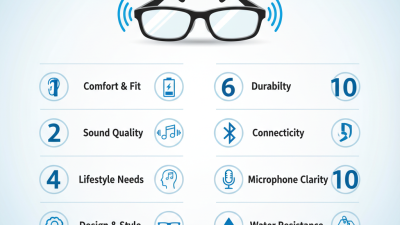
This chart illustrates the key specifications of audio glasses technology, highlighting areas such as battery life, sound quality, pricing, and weight. These metrics are crucial for understanding the future developments and challenges that lie ahead in the wearable sound technology industry.
 Smart Glasses
 Smart Ring
 Smart Locator


 +86-13613020876

 CONTACT NUMBER
 CONTACT NUMBER