How to Choose the Best Tech Glasses for Your needs?
Choosing the best Tech Glasses can significantly enhance your daily experience. These innovative eyewear options offer more than just vision correction; they provide features catering to the digital lifestyle. However, selecting the right pair is not always straightforward.
When considering Tech Glasses, reflect on your specific needs. Are you a gamer seeking immersive visuals? Or perhaps a remote worker needing blue light protection? Each pair of glasses on the market has unique features. Pricing can also vary greatly based on brand and technology. Pay attention to the details, as this choice impacts your comfort and productivity.
It’s easy to be swayed by flashy marketing. Yet, personal preference and practical usage should guide your decision. Trying on various styles might reveal unexpected preferences. Be aware of what works for you and what doesn't. Embrace the process to find the perfect Tech Glasses tailored to your lifestyle.
Factors to Consider When Choosing Tech Glasses for Digital Eye Strain
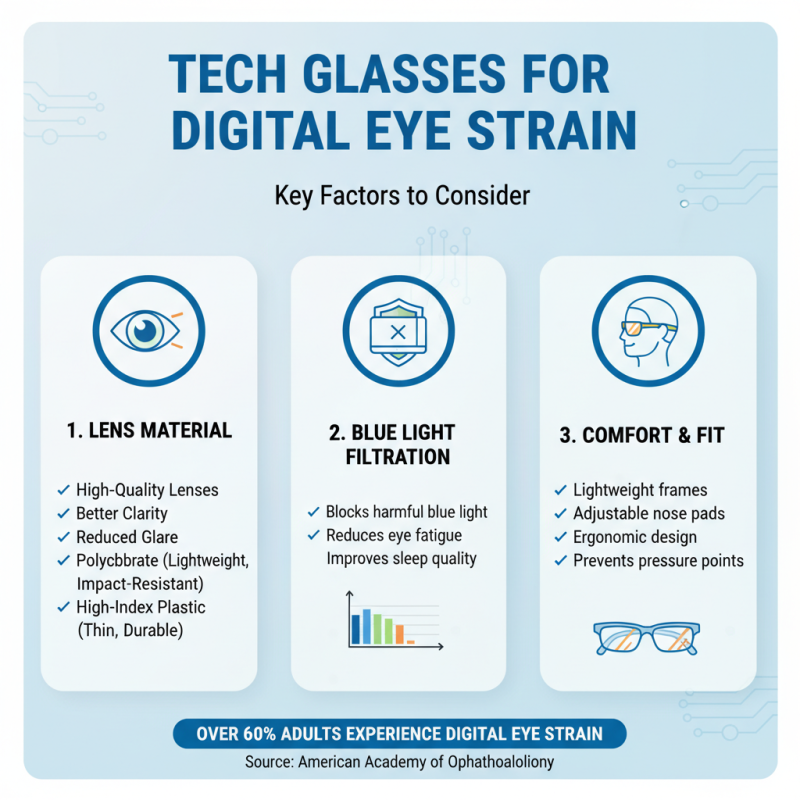
When selecting tech glasses to combat digital eye strain, several factors come into play. One key aspect to consider is lens material. High-quality lenses can provide better clarity and reduce glare. Polycarbonate and high-index plastic options are popular due to their lightweight and impact-resistant qualities. A study by the American Academy of Ophthalmology reported that over 60% of adults experience digital eye strain, highlighting the importance of effective eyewear.
Another crucial factor is blue light filtering. Recent research indicates that prolonged exposure to blue light can disrupt sleep patterns and contribute to eye fatigue. Tech glasses with blue light blocking features can minimize these effects. Notably, a report by the Vision Council found that nearly 80% of American adults use digital devices for more than two hours daily, underlining the need for protective eyewear.
Comfort and fit should not be overlooked. Ill-fitting glasses can lead to discomfort during long hours of use. Adjustability is essential for maintaining eye health. Users often report dissatisfaction when their glasses don’t fit well. Reflect on your specific needs and environments, as this can make a significant difference. Consider the various options available and weigh the pros and cons carefully.
Understanding Lens Types: Blue Light Filters, Anti-Reflective Coatings, and More
When it comes to tech glasses, understanding lens types is crucial. Blue light filters are a popular choice for many. These lenses block harmful high-energy visible (HEV) light. Studies show that excessive exposure to blue light can lead to digital eye strain and disrupt sleep patterns. According to the American Optometric Association, 80% of those who use digital devices report symptoms of digital eye strain. This highlights the importance of protective features like blue light filtering.
Anti-reflective coatings are another vital aspect to consider. These coatings reduce glare and reflections. This feature is especially beneficial for those who work long hours on screens. A study published in the Journal of Vision found that AR coatings improved visual clarity for individuals using digital devices. Yet, not all coatings are created equal; some may wear off quickly, requiring replacements sooner than expected.
Opting for lenses that combine both blue light filters and anti-reflective coatings can enhance visual comfort. While these technologies greatly benefit users, it’s essential to remember that individual needs vary. What works for one person may not suit another. Customization based on lifestyle and daily habits is key to achieving the best results. Choosing the right lenses demands careful consideration and often some trial and error.
Understanding Lens Types for Tech Glasses
Evaluating Comfort and Fit: Importance of Frame Materials and Design
Choosing the right glasses for tech use involves careful consideration of comfort and fit. The frame materials and design play a crucial role in how well the glasses perform over extended periods. Research shows that a staggering 77% of users experience discomfort when glasses don't fit properly. Lightweight materials such as titanium or carbon fiber can minimize this issue. Such materials are not only durable but also feel almost weightless on your face, enhancing comfort.
A key factor in the design is the shape of the frames. A recent report indicated that frame styles significantly impact user satisfaction. For instance, wrap-around designs can offer better coverage and reduce glare. Users should also look for adjustable nose pads and flexible temples for a customized fit. Investing in ergonomically designed frames can enhance overall experience, especially during long hours of screen time.
Tip: Ensure the bridge fits snugly. This prevents slipping and discomfort during use.
Consider your daily activities when selecting frames. Lightweight options may suit those often on the move, while sturdier frames may benefit users in more stationary roles. It's also important to reflect on how fashion meets functionality. Style matters, but remember that comfort is essential too.
Assessing Prescription Needs: Choosing Glasses for Myopia, Hyperopia, and Astigmatism
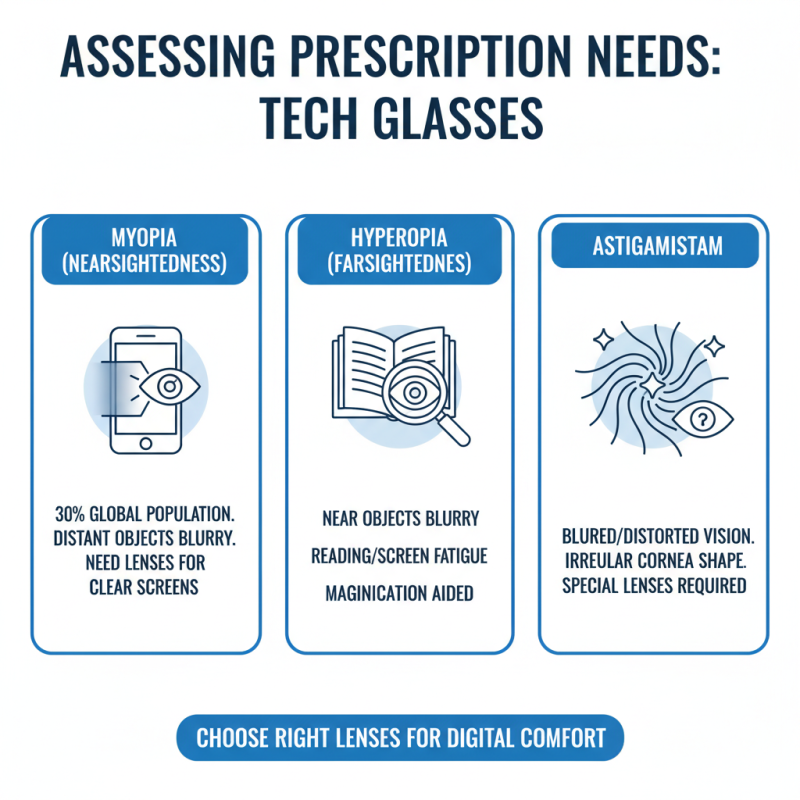
When choosing tech glasses, it’s essential to assess your prescription needs first. Myopia, hyperopia, and astigmatism present unique challenges. Myopia, commonly known as nearsightedness, affects nearly 30% of the global population. It means distant objects appear blurry. Many tech users with myopia struggle to see screens clearly, making it vital to have the right lenses.
Hyperopia, or farsightedness, affects around 10% of adults. This condition can cause discomfort during prolonged screen use. Symptoms often include eye strain and headaches. Users with hyperopia should opt for glasses that minimize distortion when viewing close-up.
Astigmatism occurs in about 35% of people. It results from an irregularly shaped cornea. This condition can cause blurred vision at all distances. Users with astigmatism should look for lenses specifically designed to correct this issue. Consulting an eye care professional can provide valuable insights. It is crucial to know that regular eye exams can significantly improve your comfort and clarity while using digital devices.
Comparing Price Ranges: Budget vs. High-End Tech Glasses for Best Value
When selecting tech glasses, price ranges play a significant role in value assessment.
Budget options typically range from $100 to $300. These glasses often offer basic functionalities like blue light filtering and UV protection.
Reports indicate that around 45% of consumers opt for budget tech glasses due to their affordability and essential features.
On the other hand, high-end tech glasses can range from $500 to over $1,000.
These models usually boast advanced features such as AR capabilities, superior optical clarity, and personalized fittings.
A recent study found that close to 35% of users believe that investing in high-quality tech glasses translates to better long-term benefits.
However, the high price may not always guarantee satisfaction, leading many to reconsider their choices.
While many prioritize budget or premium models, the best decision involves understanding personal needs.
A balance between cost and features is crucial. Users often report frustration after purchasing tech glasses that don't meet their expectations.
It's essential to evaluate how often you'll use them and the specific tasks they're intended for.
 Smart Glasses
 Smart Ring
 Smart Locator


 +86-13613020876

 CONTACT NUMBER
 CONTACT NUMBER