Smart Glasses Tips for Choosing the Right Pair for You?
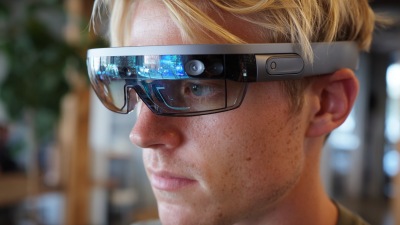
In the rapidly evolving world of technology, Smart Glasses have emerged as a transformative tool. They provide opportunities for enhanced viewing experiences. However, choosing the right pair can be overwhelming. Industry expert Dr. Lisa Chen states, "Smart Glasses can change how we interact with our environment, but the selection must align with personal needs."
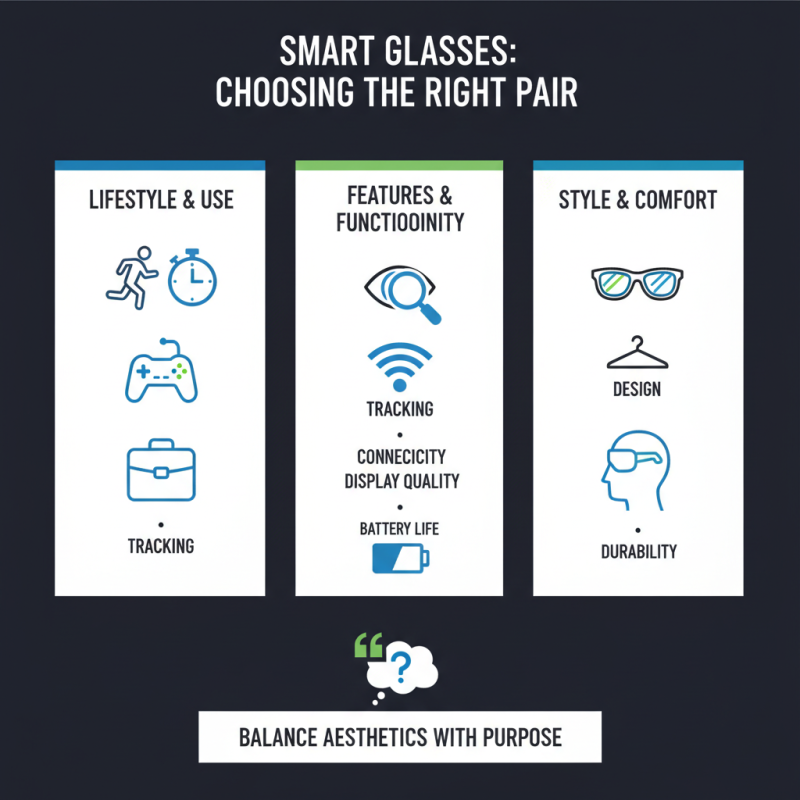
Smart Glasses come in various designs and functionalities. Some cater to professionals, while others focus on casual users. For instance, fitness enthusiasts might need glasses with advanced tracking features. Meanwhile, gamers may want immersive visual displays. Each pair can feel distinctive, yet overwhelming in choice.
Consider your lifestyle and how these glasses fit into it. Are they practical for daily use? Will they enhance your productivity or leisure? It's vital to balance style with functionality. Many users find themselves drawn to aesthetics over features, leading to dissatisfaction later. Reflect on these aspects carefully. Smart Glasses should not just look good; they should serve a meaningful purpose in your life.
Understanding Smart Glasses: Overview and Market Trends
As smart glasses gain popularity, understanding the market trends becomes essential. In 2022, the smart glasses market was valued at approximately $10 billion. Industry analysts predict it will reach $35 billion by 2027. This growth highlights the increasing demand for wearable technology, particularly in augmented reality (AR) applications.
Many consumers still hesitate to adopt this technology. Some find smart glasses bulky or uncomfortable for extended use. Features like battery life and display quality often lead to dissatisfaction. Navigating these pain points can help you choose the right pair.
When selecting smart glasses, consider your needs. Are you looking for stylish designs or specific functionalities? Look for pairs that offer comfort without sacrificing performance. Reading user reviews can help identify potential flaws. It’s important to balance your style with practicality.
The market is evolving rapidly, with new models released often. Keeping up with these trends can help you make informed decisions. Remember to assess your personal preferences in functionality. Don’t rush; take time to find what works for you.
Smart Glasses Tips for Choosing the Right Pair for You
| Feature |
Description |
Considerations |
| Display Type |
OLED, LCD, or MicroLED displays offer different experiences. |
Choose based on brightness and color accuracy needs. |
| Battery Life |
Varies from 2 to 10 hours depending on usage and model. |
Consider your usage patterns for daily tasks. |
| Weight |
Weight ranges from light (50g) to heavier models (>100g). |
Lighter models are generally more comfortable for extended wear. |
| Voice Assistant Integration |
Supports Siri, Google Assistant, or custom voice commands. |
Useful for hands-free operation. |
| Camera Quality |
Resolution can vary, affecting photo and video quality. |
Select based on your photography needs. |
| Customization Options |
Some models allow for prescription lenses and frame styles. |
Choose based on personal style and visual needs. |
Key Features to Evaluate: Display, Battery Life, and Comfort
When choosing smart glasses, display quality is crucial. Most reports indicate that about 70% of users prioritize image clarity. Look for high-resolution displays and brightness levels that work outdoors. Users often struggle with glare in bright environments. Advanced optical technology can mitigate this issue, enhancing usability in various conditions. Ergonomic design can significantly impact comfort during extended use.
Battery life is another key feature to consider. A study showed that 50% of users found short battery life frustrating. Glasses that last at least six hours on a single charge are ideal for daily activities. Consider models offering quick charging options too. Weight matters, as heavier glasses can cause discomfort. Ideally, they should be lightweight but durable.
Comfort is often overlooked but is essential for daily wear. Users report that poor fit leads to headaches and distractions. Test different styles and sizes to find what works. Proper ventilation can also enhance comfort. Ideal smart glasses should feel natural and unobtrusive. Balancing display quality, battery life, and comfort requires careful consideration, as each feature can greatly affect user experience.
Smart Glasses Features Comparison
This chart compares key features of smart glasses, evaluating display quality, battery life, comfort, weight, and price. Ratings are given on a scale of 1 to 10, with higher values indicating better performance.
Compatibility with Existing Devices: Ensuring Seamless Integration
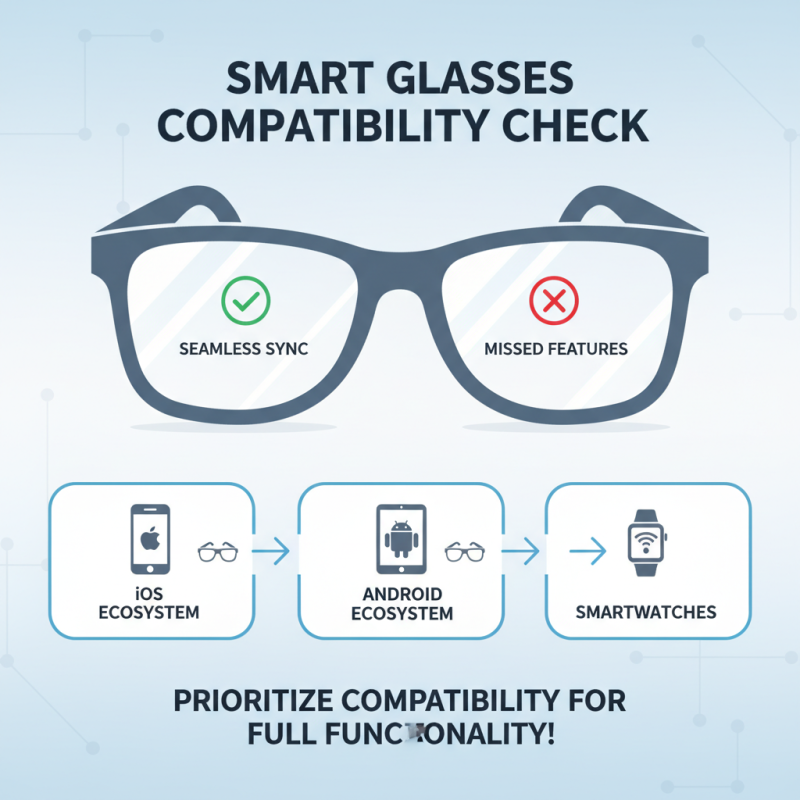
When selecting smart glasses, compatibility with existing devices is crucial. Many users fail to consider how well these glasses will sync with smartphones, tablets, or even smartwatches. If you use a particular ecosystem, like iOS or Android, ensure your glasses support it. An incompatibility could mean missing out on essential features.
It's also essential to check connectivity options. Some glasses rely on Bluetooth, while others may have Wi-Fi capabilities. A strong and stable connection makes a significant difference in user experience. Imagine disconnecting during an important video call. Frustrating, right?
Moreover, think about the apps you frequently use. Smart glasses often integrate with various applications. Ensure your favorite apps can be easily accessed. Testing out the glasses with your devices before making a purchase could save you from potential headaches. It is worth reflecting on whether the investment will indeed enhance your daily tech interactions.
Evaluating Use Cases: Work, Entertainment, and Fitness Applications
When choosing smart glasses, evaluating your specific use cases is essential. For work applications, smart glasses can boost productivity. Studies show that 65% of workers report increased efficiency with augmented reality (AR) features. Imagine being able to view emails or instructions right in your line of sight. However, the constant notifications might also distract some employees. Not every environment suits wearable tech. Offices with strict dress codes could be less accepting of smart glasses.
In entertainment, smart glasses offer immersive experiences. The global AR gaming market is expected to reach $300 billion by 2025. Picture enjoying a movie where characters interact with your living space. Yet, the weight and comfort of the glasses can hinder enjoyment. Many users find them uncomfortable after a short period. This is a critical factor to test before making a purchase.
Fitness applications are rapidly evolving. Smart glasses can track workouts and suggest improvements. A recent report indicated that 40% of fitness enthusiasts appreciate real-time feedback from wearable devices. However, incomplete data or software bugs can frustrate users. Achieving the perfect fit for workouts is crucial but often overlooked. Striking a balance between functionality and comfort remains a challenge.
Budget Considerations: Price Ranges and Value for Money Analysis
When exploring smart glasses, budget plays a vital role. Prices vary widely depending on features and capabilities. Entry-level models may cost around a few hundred dollars. Meanwhile, premium options can soar to over a thousand. It’s crucial to weigh what you truly need against your budget. Are augmented reality features essential for your daily life?
Value for money is another key factor. Some models come with advanced functionalities, but are they worth the investment? A basic pair with good lens quality might meet your needs better. It’s smart to evaluate your usage. Regular users might prefer investing a bit more for comfort and longevity. However, if you’re a casual user, a less expensive model could suffice.
Additionally, read reviews and seek feedback. Sometimes, personal experiences illuminate hidden pros and cons. Analyze whether it’s just the hype or real functionality. Smart glasses can enhance your day, but only if chosen wisely. Balancing features, comfort, and price is essential. Ultimately, a thoughtful decision today can save you money tomorrow.
 Smart Glasses
 Smart Ring
 Smart Locator


 +86-13613020876

 CONTACT NUMBER
 CONTACT NUMBER