2026 Top Tech Glasses Buying Guide for Global Buyers
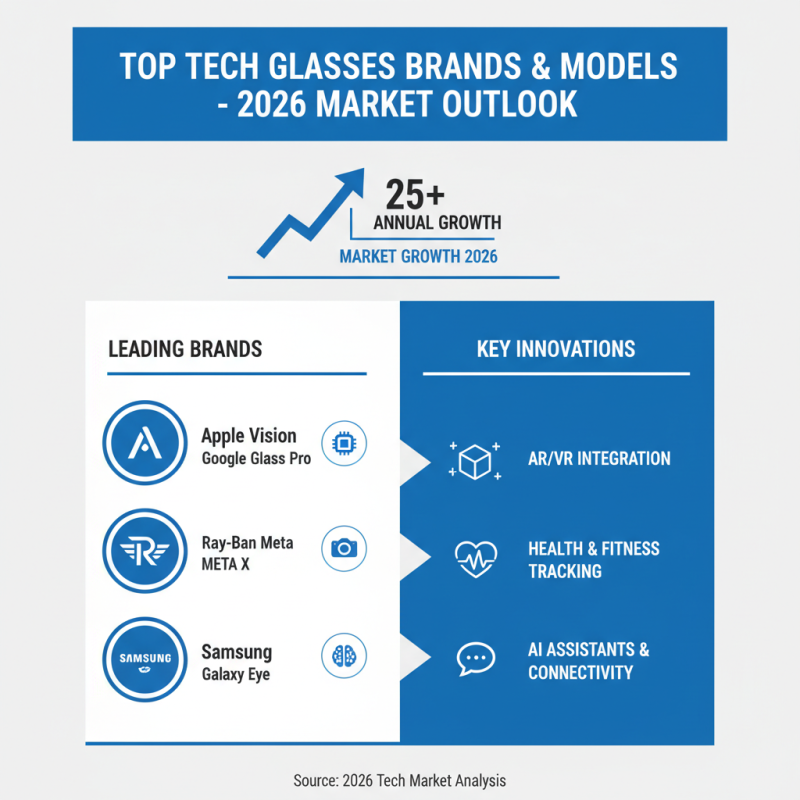
As we approach 2026, the landscape of Tech Glasses continues to evolve rapidly. This year, the global market is projected to reach $12 billion, showing a growth rate nearly three times faster than traditional eyewear. This surge reflects growing consumer interest and advancements in augmented reality (AR) and smart technology.
Tech Glasses have become more than just accessories; they are essential tools in various sectors. Industries like healthcare, education, and manufacturing are leveraging these devices to enhance productivity and training. Despite the potential, challenges remain. Users often encounter issues like battery life and limited app compatibility. Critical feedback is important, prompting manufacturers to adapt and innovate effectively.
Understanding the nuances of Tech Glasses is crucial for buyers. Factors such as comfort, design, and functionality must be weighed carefully. The right choice can significantly impact user experience and satisfaction. However, the market's complexity can be daunting. It’s essential to stay informed and reflect on both user reports and industry trends to make the best investment.
Key Features to Consider When Buying Tech Glasses
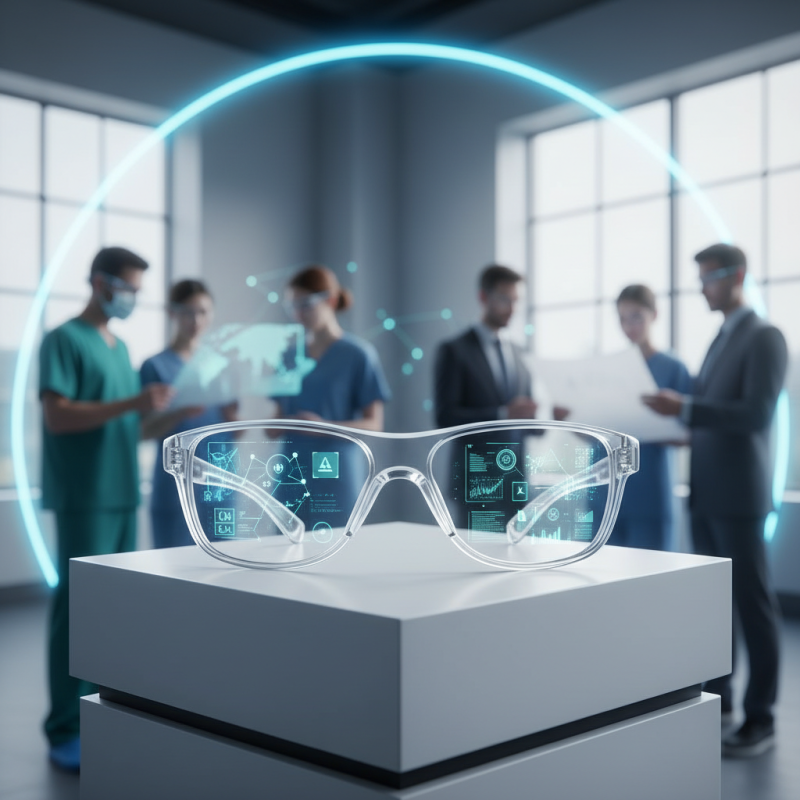
When choosing tech glasses, several key features stand out. First, consider the display technology. High-resolution lenses enhance your viewing experience, making interactions smooth and clear. Different types of displays, like holographic or augmented reality, cater to varied needs. Think about what aligns with your everyday tasks.
Battery life is another important factor. Many tech glasses offer a compact design, which can impact how long they last between charges. Opt for models that can sustain extended use, as constant recharging can be inconvenient. In real-life scenarios, glasses that last all day can greatly improve usability.
Comfort is often overlooked but essential. Poorly fitting glasses can lead to discomfort, especially during long periods of use. Adjustable frames or lightweight materials may enhance your experience significantly. Remember, if the glasses feel awkward, even the best technology will not be beneficial in the long run.
2026 Tech Glasses Features Comparison
Understanding Different Technologies Used in Smart Glasses
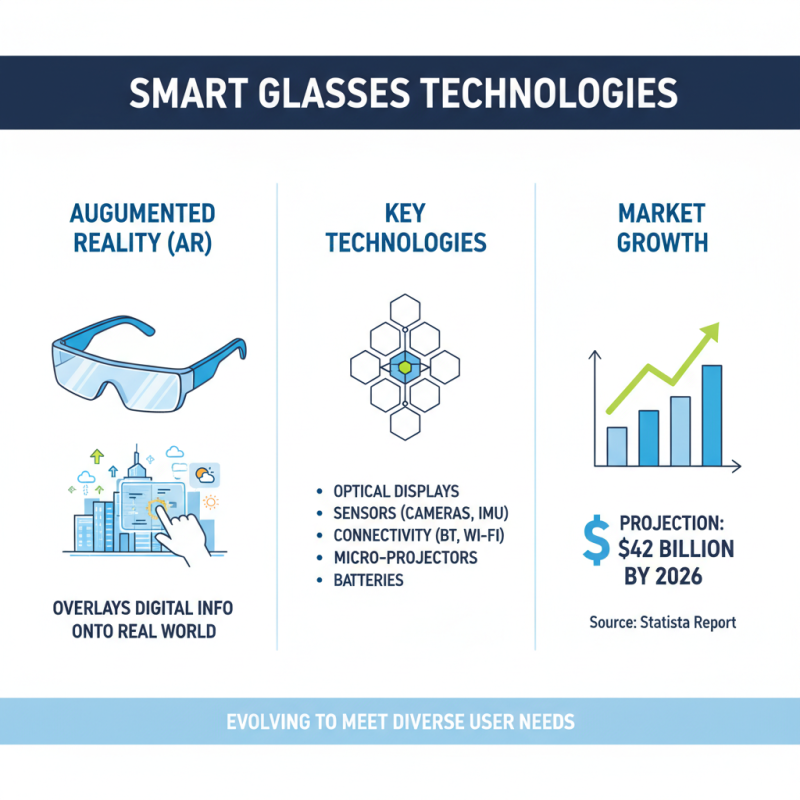
Smart glasses are rapidly evolving, integrating various technologies that cater to diverse user needs. Many models today employ augmented reality (AR) to overlay digital information onto the physical world. According to a recent report by Statista, the smart glasses market is projected to reach $42 billion by 2026, showcasing the growing demand for advanced features.
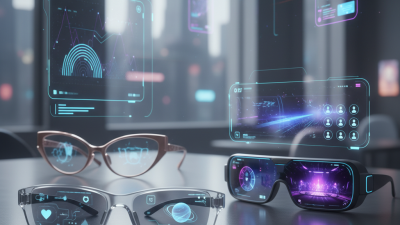
Different types of displays are key components in smart glasses. OLED and microLED technologies provide vibrant visuals while optimizing battery life. Notably, advancements in miniaturization have made it possible to incorporate high-quality sensors and cameras into lightweight designs. However, the integration of complex technologies can lead to challenges in user experience. Some users report discomfort or issues with calibration when wearing smart glasses for extended periods.
**Tip:** When choosing smart glasses, prioritize comfort and battery life. Look for models with adjustable frames and robust power management.
Developers are also exploring voice recognition and touch interfaces to enhance usability. Still, this pushes manufacturers to ensure privacy and data security. Balancing innovation with user safety remains crucial. Feedback from users often highlights the need for improvements in integration and responsiveness.
**Tip:** Read user reviews before purchasing. Real-world experiences can provide valuable insights that technical specifications may miss.
Comparative Analysis of Price Ranges for Tech Glasses
When looking to buy tech glasses, price always plays a significant role. There are various price ranges to consider. For entry-level models, prices can start as low as $100. These models usually offer basic functionality, like notifications and call handling. They serve well for casual users who want a glimpse of tech features without a hefty investment.
Mid-range options typically cost between $200 to $500. These glasses often include better displays, improved battery life, and more functionalities, such as fitness tracking or camera features. They attract tech enthusiasts seeking more performance without breaking the bank. However, users may find that the included functionalities sometimes fall short of their expectations.
High-end tech glasses can exceed $1,000. They promise advanced capabilities, such as augmented reality or high-definition displays. While they cater to professionals and tech elitists, not every feature may be practical for daily use. Buyers should consider whether these advanced options align with their needs or if simpler models could suffice. Evaluating these price ranges will help global buyers make informed choices.
User Reviews and Feedback on Popular Tech Glasses Models
As tech glasses gain popularity, user reviews are invaluable in guiding potential buyers. Many users appreciate features like augmented reality and hands-free operation. They often praise clarity and design, noting that comfort is essential for long-term wear. However, some feedback indicates issues with battery life and connectivity, which can be frustrating during use.
Users also share their experiences with the companion apps linked to these glasses. While some find them intuitive and user-friendly, others report occasional glitches. It’s clear that while the technology is promising, there are areas for improvement.
The journey into tech glasses is not without its pitfalls. Users advise prospective buyers to consider their specific needs. For example, a casual user may prioritize style, whereas a professional might focus on functionality. The wide array of options can be overwhelming, and it's essential to dig into reviews for practical insights.
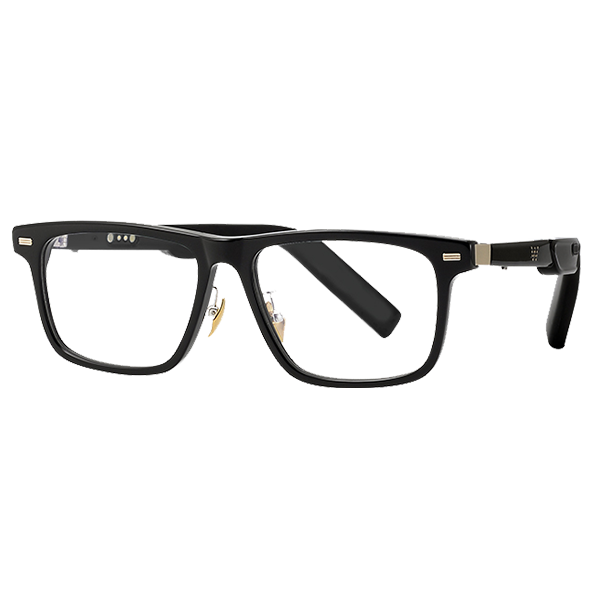 Smart Glasses
 Smart Ring
 Smart Locator


 +86-13613020876

 CONTACT NUMBER
 CONTACT NUMBER