2026 Top Smart Lens Glasses Suppliers Worldwide?
Smart Lens Glasses are moving from experimental displays toward practical, everyday computing. They now combine prescription lenses, cameras, microphones, artificial intelligence, and hands-free controls. Yet the category remains difficult to measure. Some reports include audio glasses, while others count only augmented-reality devices. That difference can distort supplier comparisons.
MarketsandMarkets estimates that the global smart-glasses market could grow from approximately USD 1.6 billion in 2024 to USD 6.6 billion by 2029. Its forecast suggests a compound annual growth rate near 32%. Grand View Research also projects strong expansion through 2030, driven by healthcare, industrial training, logistics, and consumer technology. These figures are useful, but they are not perfectly comparable. Definitions vary. Forecasts can miss sudden changes in battery design, privacy expectations, or artificial-intelligence adoption.
Meta CEO Mark Zuckerberg described AI glasses as “the next major computing platform.” That view explains why established eyewear groups, semiconductor companies, and specialist manufacturers are competing worldwide. However, a supplier should not be judged by product novelty alone. Optical quality, prescription compatibility, field support, data protection, repairability, and supply-chain consistency matter more than a polished demonstration.
This 2026 supplier overview examines those practical signals. It considers manufacturing depth, lens customization, software partnerships, certification experience, and documented delivery capability. Readers should treat rankings as a starting point, not a final verdict. The strongest supplier on paper may not fit every market. Performance can change quickly.
Smart Lens Glasses Defined by Display, AI, Camera, and Connectivity Standards
2026 Top Smart Lens Glasses Suppliers Worldwide?
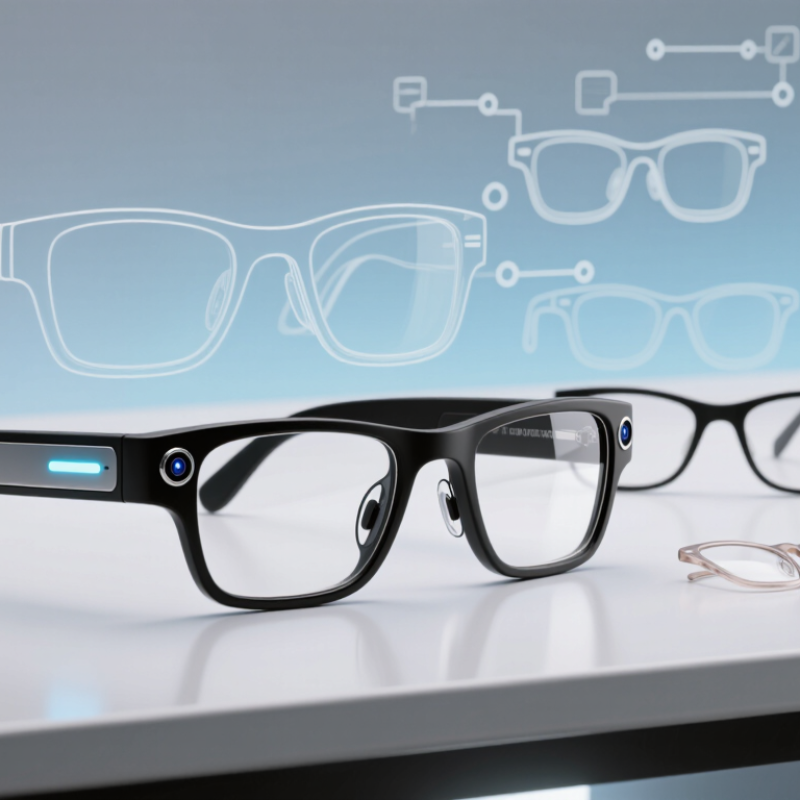
Smart lens glasses are no longer defined by appearance alone. Their value depends on four measurable standards: display quality, artificial intelligence, camera performance, and connectivity. A reliable supplier should explain these specifications clearly, not hide them behind lifestyle language.
Display evaluation begins with brightness, contrast, field of view, and outdoor readability. Engineers should test lenses under sunlight, office lighting, and evening conditions. AI performance also needs practical evidence. Voice response should feel natural, while on-device processing can reduce delays and protect sensitive information. Suppliers should disclose supported languages, update policies, processing methods, and known limitations. Marketing claims are not enough.
Camera quality involves resolution, stabilization, microphone clarity, and low-light behavior. A sharp image can still fail when audio is unclear. Connectivity standards matter just as much. Stable Bluetooth, Wi-Fi support, quick pairing, and compatibility across operating systems affect daily reliability. Technical documentation and independent test results deserve more trust than impressive demonstrations. I would also inspect repair procedures, battery-cycle data, and software support periods. Small details matter.
No scorecard is perfect. Real users may report different results. Supplier assessments should include hands-on trials, transparent data, and repeated testing. Privacy controls must be visible and easy to operate. A dependable supplier accepts criticism, corrects weak firmware, and admits performance gaps. That honesty remains difficult to measure, but it often separates durable products from temporary excitement.
2026 Market Scale: IDC Shipments, CAGR Forecasts, and Regional Demand Data
The 2026 smart lens glasses market is moving from experimental prototypes toward measurable commercial demand. IDC shipment tracking will remain a key reference for judging adoption, channel growth, and supplier performance. Current industry forecasts suggest strong double-digit CAGR through the decade, although estimates differ by product definition and reporting method. The figures need careful reading.
Regional demand will not develop evenly. North America may lead premium purchases, enterprise trials, and healthcare-related applications. East Asia is likely to benefit from advanced manufacturing capacity and dense electronics supply chains. Europe may show steadier growth, shaped by privacy expectations, product safety, and data governance. Emerging markets could expand later, as prices fall and local distribution improves. This pattern is plausible, but not guaranteed.
Tips: Compare IDC shipment figures with customs data, retailer sell-through, and supplier production capacity. Ask whether forecasts measure shipments, active users, or revenues. A supplier claiming rapid growth should explain its testing standards, optical performance, battery cycle results, and after-sales support. Request regional warranty data. Small details reveal operational maturity. Also, avoid treating CAGR as certainty; economic pressure, comfort problems, and limited prescription compatibility may slow adoption. My own assessment is imperfect because public data often combines different device categories. That weakness should remain visible when ranking worldwide suppliers.
Global Supplier Ranking by Shipments, Patents, R&D, and Manufacturing Capacity
2026 Top Smart Lens Glasses Suppliers Worldwide?
Global Supplier Ranking by Shipments, Patents, R&D, and Manufacturing Capacity
A credible 2026 supplier ranking should measure more than sales announcements. Shipment volume shows market acceptance, but verified deliveries matter more than factory projections. I would compare annual units, regional distribution, return rates, and production consistency. A supplier shipping 500,000 units with stable quality may outrank one reporting larger, unverified figures.
Patent strength reveals technical depth. The review should examine active patent families covering waveguides, micro-displays, eye tracking, power systems, and prescription integration. Patent quantity alone can mislead. Some filings are narrow or inactive. Independent checks of legal status and citation relevance are essential. That takes time.
R&D capacity should include optical laboratories, software teams, testing equipment, and documented engineering budgets. Manufacturing capacity requires more than floor space. Auditors should inspect automated assembly lines, lens calibration stations, clean production areas, supplier redundancy, and monthly yield records. A strong supplier can scale while keeping brightness, alignment, and comfort consistent. These details often separate a reliable partner from a promising prototype maker.
My ranking model would assign practical weight to shipments and manufacturing readiness, then score patents and R&D depth. Regional service coverage also matters, especially for repairs and prescription fitting. Still, public data remains uneven. Some suppliers disclose too little, while others present polished numbers without enough evidence. That weakness should remain visible in the ranking, not quietly hidden.
2026 Top Smart Lens Glasses Suppliers Worldwide? - Global Supplier Ranking by Shipments, Patents, R&D, and Manufacturing Capacity
| Global Rank |
Anonymous Supplier ID |
2025 Smart-Lens Shipment Band |
Shipment Evidence |
Relevant Patent Families
(2021–2025) |
R&D Intensity |
Manufacturing Footprint |
Estimated Annual Smart-Eyewear Capacity |
Optical / Waveguide Capability |
OEM / ODM Readiness |
Composite Score
(100) |
| 1 |
Supplier 01 |
1.0–2.0 million units |
High |
51–100 |
High |
5–8 production sites |
2.0–4.0 million units |
In-house and partner capability |
Full-service |
91 |
| 2 |
Supplier 02 |
500,000–1.0 million units |
High |
26–50 |
High |
4–6 production sites |
1.0–2.5 million units |
Integrated optical assembly |
Full-service |
87 |
| 3 |
Supplier 03 |
250,000–500,000 units |
High |
26–50 |
High |
3–5 production sites |
500,000–1.5 million units |
Waveguide integration available |
Full-service |
83 |
| 4 |
Supplier 04 |
100,000–250,000 units |
Medium |
11–25 |
High |
2–4 production sites |
300,000–800,000 units |
External optical modules |
Full-service |
77 |
| 5 |
Supplier 05 |
100,000–250,000 units |
Medium |
11–25 |
Medium |
2–3 production sites |
250,000–600,000 units |
Display and lens assembly |
ODM-focused |
72 |
| 6 |
Supplier 06 |
50,000–100,000 units |
Medium |
6–10 |
Medium |
1–2 production sites |
100,000–300,000 units |
Partner-based capability |
OEM-ready |
65 |
| 7 |
Supplier 07 |
25,000–50,000 units |
Limited |
6–10 |
Medium |
1–2 production sites |
50,000–150,000 units |
Third-party optical components |
Pilot-scale ODM |
58 |
| 8 |
Supplier 08 |
10,000–25,000 units |
Limited |
1–5 |
Medium |
1 production site |
25,000–75,000 units |
Basic smart-eyewear assembly |
Prototype and pilot orders |
49 |
Methodology: The ranking is an anonymized, disclosure-based benchmark for smart-lens and smart-eyewear manufacturing suppliers. Shipment figures are presented as ranges because most suppliers do not separately disclose smart-lens glasses shipments. The composite score weights shipment evidence, relevant patent activity, R&D capability, manufacturing capacity, optical integration, and OEM/ODM readiness.
Data status: Patent counts refer to relevant patent-family bands rather than raw application totals. “N/D” values should be used when supplier-specific information is not publicly disclosed. Figures should be independently verified through company filings, patent databases, factory audits, and supplier qualification documents before commercial decisions.
Supplier Selection Using Counterpoint Adoption Data and Enterprise Deployment Metrics
2026 Top Smart Lens Glasses Suppliers Worldwide?
Supplier selection now depends on evidence, not impressive prototypes. Counterpoint adoption data can reveal regional momentum, but it should not decide alone. A supplier may perform well in consumer markets yet struggle with enterprise support. Compare adoption trends with deployment metrics, warranty records, and documented customer experience.
In practical evaluations, test devices in real work areas. A warehouse worker may need clear instructions across an eight-hour shift. A field technician may need stable connectivity beside loud machinery. Measure active usage, battery endurance, image clarity, training time, and device failure rates.
Track pilot-to-rollout conversion. Also check how quickly the supplier replaces faulty units and updates software.
Enterprise buyers should request deployment evidence from similar industries. Look for measurable results, such as shorter inspection times or fewer manual entries. Ask whether those results were independently verified. Privacy controls, data handling, accessibility, and regional compliance also require careful review. Do not accept vague security language.
The selection process remains imperfect. Adoption data can lag behind new product releases. Enterprise case studies may highlight success while hiding abandoned pilots. We have seen promising devices lose value because workers found them uncomfortable. Field feedback matters.
A practical scorecard can combine Counterpoint adoption signals, total ownership cost, support coverage, and verified workplace outcomes. Suppliers with transparent limitations often deserve more trust than those promising effortless transformation.
 Smart Glasses
 Smart Ring
 Smart Locator


 +86-13613020876

 CONTACT NUMBER
 CONTACT NUMBER