2026 Top Digital Eyewear Trends You Need to Know?
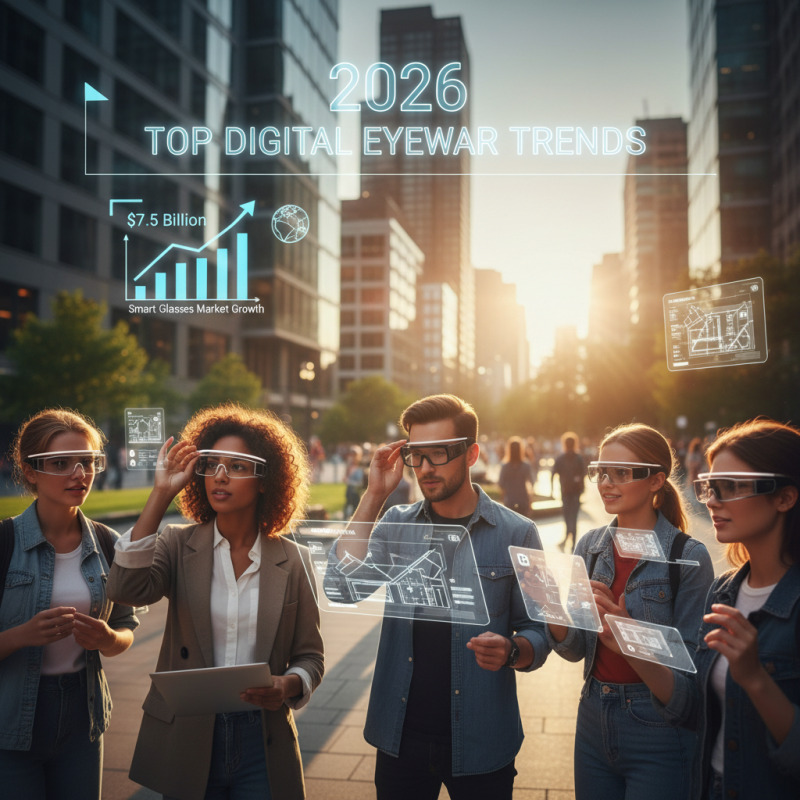
As we approach 2026, the landscape of Digital Eyewear is evolving rapidly. According to recent reports from Statista, the global market for smart glasses is projected to reach $7.5 billion by 2024. This signifies a growing interest in tech-integrated eyewear that enhances everyday experiences. Yet, despite strong growth, several challenges remain.
Digital Eyewear technology is not just about fancy gadgets. It aims to solve real-world problems. For example, augmented reality features can assist those in need of navigation or visual aids. However, adoption rates are still below expectations. Many consumers are hesitant due to price and functionality concerns.
In this context, the trends of 2026 will be pivotal. We need to reflect on what consumers truly want and how we can innovate responsibly. Digital Eyewear must also consider user experience, aesthetics, and comfort. Balancing technology with usability is essential for mass acceptance. As we explore these upcoming trends, it’s crucial to question how these innovations can genuinely enhance lives.
Emerging Technologies Shaping Digital Eyewear in 2026
As we head into 2026, digital eyewear continues to evolve rapidly. Emerging technologies are at the forefront of this revolution. According to a recent report, the market for augmented reality (AR) eyewear is projected to reach $25 billion by 2026. This growth will be driven by advancements in display technologies and sensor integrations, allowing for more immersive experiences.
One notable trend is the integration of artificial intelligence (AI) in eyewear. AI can enhance user experience by providing real-time information and personalized recommendations. A survey indicated that 70% of consumers are interested in eyewear that can analyze health data, such as eye strain and fatigue. This intersection of health and technology is crucial but raises questions about privacy and data security.
However, challenges remain. The technology is often viewed as clunky or not fully ready for daily use. There is a lingering skepticism about long-term wearability and user comfort. While developers are eager to innovate, the need for consumer acceptance is critical. The journey of digital eyewear is filled with potential and pitfalls alike, reflecting the complex relationship between technology and everyday life.
Key Features and Functionalities of Next-Gen Digital Eyewear
As digital eyewear evolves, the focus is shifting toward enhanced functionalities. Next-gen eyewear promises advanced features tailored for everyday use. Imagine glasses that not only correct your vision but also provide augmented reality overlays. This integration transforms how we experience our environment. You could receive navigation prompts while cycling. Notifications appear seamlessly in your field of vision.
However, challenges remain. The battery life of these devices is often limited. Users may find themselves frustrated with the need for constant recharging. Additionally, not all people are comfortable with such technology. Some may feel overwhelmed by constant digital interaction. Privacy concerns also linger. How much data will these devices collect, and how will it be used? That question is crucial.
User interfaces need to be intuitive. Complications can lead to reduced adoption rates. People desire functionality without a steep learning curve. The ideal device remains a balance between technology and user experience. Finding that harmony is critical for the future of digital eyewear.
Design Innovations: Aesthetic Trends in Digital Eyewear by 2026
As we look forward to 2026, digital eyewear is set to undergo remarkable design innovations. These trends prioritize aesthetics while offering practical features. Sleeker, slimmer frames are becoming a norm. Many designs embrace bold colors and geometric shapes. The fusion of art and technology will create stunning visual experiences.
Virtual interfaces are more integrated into frames. Users can access notifications and information seamlessly. The challenge lies in balancing form with function. Many users still seek comfort during prolonged use. Some devices may appear more like art pieces, yet they could compromise practicality.
Sustainable materials will likely dominate. Eco-friendly choices are essential as consumers prioritize environmental impact. However, sourcing these materials might pose difficulties. The design must not only be attractive but also sustainable. This tension between beauty and efficiency could spark fascinating debates. The journey toward desirable, functional eyewear is still unfolding.
2026 Top Digital Eyewear Trends
This chart displays the projected popularity of various digital eyewear trends by 2026, showcasing the anticipated adoption rates of features and functionalities.
Market Growth and Consumer Adoption of Digital Eyewear Trends
The market for digital eyewear is on a strong upswing. According to a recent report, the global digital eyewear market is projected to grow at a CAGR of 20% from 2023 to 2028. This rapid growth signals increased consumer acceptance, likely driven by advancements in technology. As augmented reality (AR) and virtual reality (VR) become more integrated into daily life, more people are viewing digital eyewear as essential tools.
However, the adoption rate varies among demographics. Younger consumers are more inclined to invest in digital eyewear. A survey indicated that over 70% of millennials express interest in AR glasses. This contrasts with older generations, who remain hesitant. Concerns about usability and privacy linger. The challenge for manufacturers is to address these doubts while providing seamless user experiences. Innovations are needed, but execution matters.
Additionally, there’s an ongoing dialogue about the balance between technology and real-world interaction. Some users report feeling disconnected when relying too heavily on digital eyewear. As companies strive to enhance functionality, they must also prioritize user well-being. Continuous feedback loops with consumers are critical for improvement. Understanding these trends can steer the digital eyewear industry toward a more engaged and inclusive future.
2026 Top Digital Eyewear Trends You Need to Know
| Trend |
Market Growth (%) |
Consumer Adoption Rate (%) |
Key Features |
| Augmented Reality Integration |
25% |
40% |
Real-time data overlay, interactive features |
| Health Monitoring |
30% |
35% |
Heart rate, activity tracking |
| Voice Control Features |
20% |
50% |
Hands-free operation, voice commands |
| Smart Connectivity |
28% |
45% |
IoT integration, app connectivity |
| Sustainable Materials |
22% |
33% |
Eco-friendly materials, recyclable |
Future Implications: Digital Eyewear in Daily Life and Professional Use
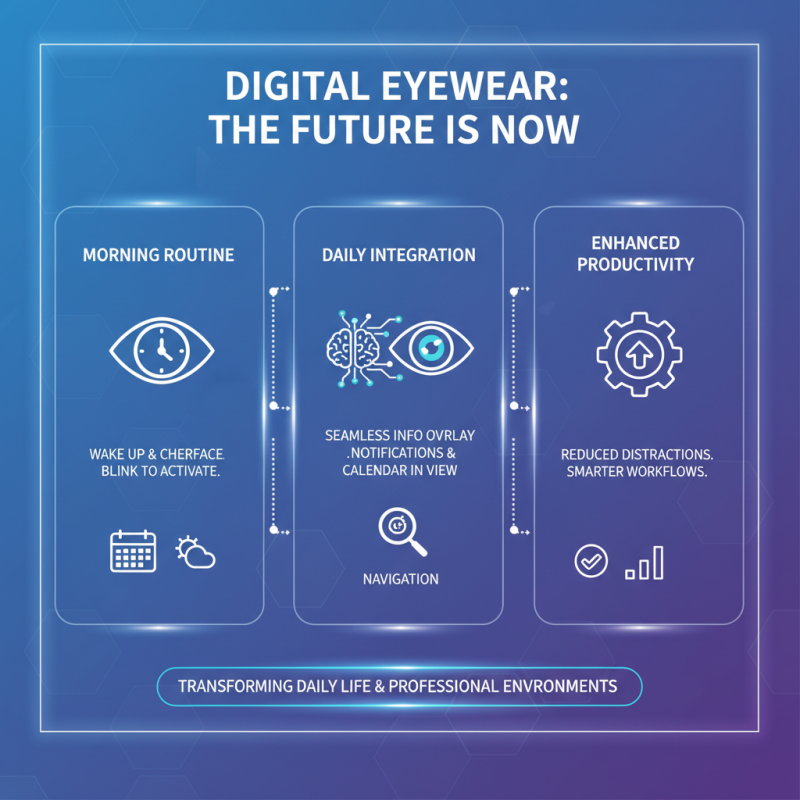
The future of digital eyewear promises significant changes in daily life and professional environments. Imagine waking up and choosing your digital interface with the blink of an eye. This technology could seamlessly integrate information into our field of vision. Notifications, calendars, and even navigation maps may soon overlay real-world views, enhancing productivity while reducing distractions.
In professional settings, digital eyewear could transform how we collaborate. Remote teams may communicate effortlessly through augmented reality overlays. Meetings could take place in virtual spaces, where participants interact as if they were in the same room. However, reliance on such technology raises concerns about privacy and interpersonal connections. It may blur the line between personal and professional lives, making it harder to disconnect.
In everyday situations, digital eyewear could enhance convenience. Imagine receiving updates on traffic while driving or having a recipe projected while cooking. Yet, this integration will demand careful consideration. It could overwhelm users with information. Balancing functionality and distraction will be crucial in adopting this new technology. As we advance, reflecting on these implications will become essential.
 Smart Glasses
 Smart Ring
 Smart Locator


 +86-13613020876

 CONTACT NUMBER
 CONTACT NUMBER